
If you are uncertain which would benefit your business more – a virtual CFO or a full-time CFO – then read on. There’s no single answer, as it varies based on the size of your business and your needs. This is where a Virtual CFO vs Full-Time CFO comparison is most frequently made, in growing businesses. For start-ups and small and medium enterprises, a virtual CFO might be the best option for high-quality financial guidance at a lower cost. Also, for larger companies requiring constant and day-to-day financial leadership, a full-time CFO is ideal.

What Is a Virtual CFO?
A virtual CFO is a person who is well-versed in finance and provides expert financial advice on an ad hoc basis or as an outsourcing service. Executive assistance for enterprises on a part-time basis. This model can also help businesses improve their budgeting, cash flow, reporting, and financial planning skills and control their costs.
What Does a Full-Time CFO Do?
A CFO is the individual who is in charge of the company’s financial plan. They budget, prepare financial reports, ensure compliance, manage risk, raise funds, and plan for the future. For businesses with complicated financial structures and require assistance on a frequent basis, a full-time CFO is employed.
Virtual CFO vs Full-Time CFO
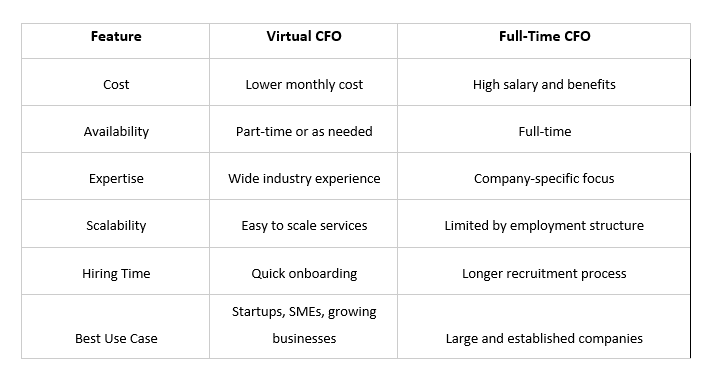
Businesses need to think about budget and plans for the future, and not just cost, when choosing between a Virtual CFO services vs Full-Time CFO services.
When Should You Choose a Virtual CFO?
If you’re looking for a virtual CFO, opt for:
- You have a growing business and don’t need a full-time CFO.
- Financial expertise that doesn’t require a long-term arrangement.
- You desire improved cash flow management in your company.
- You need professional assistance for expansion or fundraising.
- You wish to have flexible financial leadership.
When Should You Hire a Full-Time CFO?
Consider hiring a full-time CFO in the following situations:
- Extensive and Complex Financial Operations
For large financial operations and compliance, a full-time CFO is capable of handling them.
- Need for Daily Financial Leadership
They provide an ongoing financial review and help with the business’s operation.
- Multiple Departments or Business Units
The full-time CFO’s job is to oversee the financial planning activities of different teams and divisions.
- Regular Investor and Board Reporting
They produce financial reports, give business performance updates, and join in with investor and board discussions.
- Long-Term Strategic Financial Leadership
A full-time CFO develops long-term financial plans that will help this business grow.
The decision between virtual CFO vs full-time CFO hinges on the need your business has for financial leadership on a daily basis.
Benefits of Hiring a Virtual CFO
In the case of growing businesses, hiring a Virtual CFO vs Full-Time CFO might be more straightforward, as a virtual CFO offers cost-effective support, financial expertise, and flexibility when businesses grow.
- Lower Operating Costs
A virtual CFO offers high-level financial knowledge at an affordable cost, without having to pay a full-time salary.
- Access to Experienced Financial Professionals
Businesses are assisted by finance gurus offering their expertise in different fields.
- Better Cash Flow Planning and Financial Reporting
The virtual CFO keeps an eye on cash flow and creates understandable financial reports.
- Flexible Services That Grow with Your Business
The level of support can be increased or decreased as per the requirements of the business.
- Faster Implementation
A virtual CFO can get to work with your company much quicker.
- Strategic Financial Guidance
A virtual CFO provides business-building, forecasting, and budgeting advice.
FAQs
- Is a virtual CFO suitable for startups?
Yes. Startups have access to financial expertise without having to pay for an executive.
- Can a virtual CFO replace a full-time CFO?
Yes, for a lot of small and medium-sized businesses. They might still require the services of a full-time CFO for larger organizations with more complicated operations.
- Which option is more cost-effective?
This will depend on the needs of your company. For businesses that need help and advice without the need for an on-site executive, a Virtual CFO is the ideal choice.
Conclusion
The decision between Virtual CFO vs Full-Time CFO hinges on the nature of your business, its financial requirements, and budget. A virtual CFO offers an expert financial point of view at a reduced expense to numerous growing companies. They can grow their financial leadership as their needs change. Check out the Online CFO Services that IamyourCFO provides and select the best financial assistance service you can get.
Author Bio
Pallab Sen is a Chartered Accountant with over 20 years of hands-on experience across Indian and multinational corporations. He guides businesses to establish structured financial systems, strategy, and growth-oriented financial leadership. Checkout his LinkedIn profile for more details